Economy
Marking our tenth anniversary: One conviction, two principles and three challenges
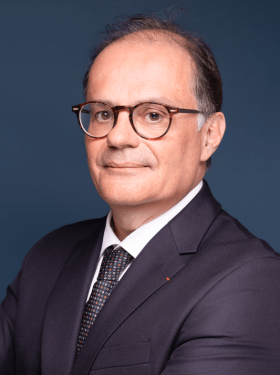
Emmanuel Moulin, Governor
Published on 2nd of October 2026

ACPR-AMF Fintech Forum – Paris, 2 October 2026
Speech by Emmanuel Moulin, Governor of the Banque de France
Madam Chair, dear Marie-Anne, Ladies and Gentlemen,
I am delighted to welcome you to the Banque de France for this new edition of the ACPR-AMF Fintech Forum, my first as Governor. Ten years after its creation, this Forum remains as relevant as ever: it serves as a space for dialogue between supervisors and players in the field of financial innovation. It has a two-fold ambition: to help us understand one another better and to jointly identify the conditions necessary for innovation to flourish. I will structure my remarks in three parts: first, one conviction regarding the role of fintechs in the European financial sector; second, two principles to guide the actions of supervisors; and finally, three challenges that I believe will be decisive for the coming decade.
1. One conviction: a vital ecosystem for France and Europe
Let me begin with a conviction. Fintechs, which today account for more than 1,200 companies and close to 55,000 jobsi in France, are a key driver of our financial sector’s dynamism. In just a few years, they have demonstrated their ability to transform technological advances into innovative financial services and efficiency gains for the entire industry. Their contributions are numerous: peer-to-peer payments, integrated e-invoicing and business accounting solutions, new lending methods and even new ways of distributing insurance.
Over the past ten years, the fintech ecosystem has also reached a certain level of maturity, evolving from a landscape consisting mainly of start-ups into a more diverse sector in which several players have grown to a significant size. This is particularly true of the 15 French fintech unicorns.ii The objective is therefore no longer simply to facilitate fintechs’ entry into the market, but also to support their scaling up. This brings me to the issue of funding. Fundraising rose sharply in the first half of 2026, with a 51% year-on-year increase,iii underpinned by a few major deals. This encouraging trend remains fragile, however, and the ecosystem needs more equity capital, particularly from European investors. This is the very purpose of the Savings and Investment Union, which aims to better reallocate European savings to support innovative investment and, ultimately, growth in Europe. In this context, three priorities seem to me to be particularly advisable:
(i) The strengthening of equity financing, which entails the gradual development of European retirement savings and pension funds, the promotion of ambitious public-private partnerships for venture capital, the development of savings products accessible to households to encourage a more diversified asset allocation, and an increased focus on financial education
(ii) The creation of a “28th regime”, proposed by the European Commission in March 2026 and currently under legislative review
(iii) The establishment of a genuine European framework for market infrastructures and post-trade players.
2. Two principles must guide the actions of supervisors
While the fintech ecosystem has evolved considerably over the past ten years, the guiding principles behind the actions of supervisors remain largely unchanged. I will highlight two of them.
The first principle is to reconcile innovation and trust. The right balance needs to be struck between openness to innovation and risk management, by applying the principle of proportionality – which is widely recognised in regulation – and by harnessing all possible synergies with existing supervisory processes. It is also essential to ensure a level playing field by adopting a technology-neutral approach.
The second principle is a corollary of the first: to maintain a regular and demanding dialogue with the entire ecosystem. I do not consider fintechs and established players to be in opposition. Whether they are competing or, as is often the case, cooperating, together they contribute to strengthening the competitiveness of the European financial sector in the face of big techs.iv In a context of considerable uncertainty, fintechs therefore warrant the same openness, dialogue and attention from us as established players. This is the very purpose of the commitments made under our Fintech Charter and their regular monitoring. It is also the ambition of the ACPR’s Fintech Innovation unit and the raison d’être of the Fintech Forum. I am also delighted that in 2026, following a few less dynamic years, the number of project leaders who have contacted the ACPR has considerably increased, reflecting not only the vitality of the ecosystem but also the importance it attaches to dialogue with the supervisor.
3. Three challenges for the coming decade
The two principles I have just outlined must continue to guide us as we face the major transformations that are already reshaping the financial sector. I will highlight three that I believe will be particularly decisive in the coming decade.
3.1. The tokenisation of finance
The first transformation is the tokenisation of finance. This will generate significant efficiency gains by reducing settlement times and transaction costs. However, it also raises issues of financial stability and sovereignty. In particular, Europe could become dependent on non-European infrastructure and non-euro-denominated settlement assets.vi
The European response rests on three complementary pillars. The first is to provide a central bank currency suited to the digital age. For the general public, this takes the form of the digital euro project, while for the interbank market, the Eurosystem is developing two initiatives: first, Pontes, launched on 21 September,vii is a wholesale CBDC that enables financial intermediaries to settle transactions in central bank money via a DLT platformviii operated by the Eurosystem; and second, in the longer term, Appia aims to define the contours of an integrated European ecosystem for tokenised finance, in close cooperation with market participants.
The second pillar aims to promote the emergence of a European offering of tokenised commercial bank money. This should include tokenised bank deposits, euro-backed stablecoins,ix and payment infrastructures for the multilateral clearing of these commercial bank money tokens. The Banque de France and the ACPR intend to act as catalysts to support the European financial sector in the coordinated development of this offering. This is precisely purpose of the GSIT, the Groupe stratégique sur l’innovation et la tokenisation (Strategic Group on Innovation and Tokenisation), launched in March 2026 together with the AMF, the French Treasury and private-sector players in the Paris financial centre. The Pythagore project, spearheaded by the Banque de France and Euroclear France, is a concrete example of this joint work: central bank tokens provided via Pontes will, by the end of 2026, enable the settlement of tokenised NEU CP.
The third pillar is regulatory. With the MiCAx and “Pilot regime”xi regulations, Europe already has a framework that is conducive to the emergence of new players and blockchain-based activities. However, this framework needs to be adapted to keep pace with developments in tokenised finance. A targeted revision of the MiCA Regulation could clarify the legal treatment of tokenised deposits and the regime applicable to stablecoins, while providing a clearer framework for the use of non-euro stablecoins in everyday payments and multi-issuer models. The Pilot regime, for its part, could be made permanent as part of the MISPxii package in order to provide greater certainty for market participants. To make it more attractive while remaining proportionate to the financial stability challenges, it would be advisable to raise the activity ceilings to around EUR 300 billion.
3.2. Artificial intelligence
The second transformation is that of artificial intelligence (AI). It has become one of the main drivers of innovation for fintechs: close to 80% of them now use it in their operations.xiii However, like any major technological breakthrough, AI also raises new risks that could affect access to credit or insurance, or make it more difficult for customers to understand a decision that concerns them. There is also an increased cyber threat, in a context where AI systems themselves can become either vectors or targets of attack. The incident involving Hugging Face provided a particularly striking illustration of this risk during the summer.
Faced with these risks, we are fortunately able to rely on existing foundations. The DORAxv regulation provides a robust framework for IT risk management. The AI Actxvi complements this framework with specific requirements for “high-risk” AI systems. In the financial sector, this category includes systems used for granting credit, assessing risk and pricing insurance. The ACPR will be responsible for supervising these systems from December 2027. We are actively preparing for this new mission, notably by carrying out methodological work in cooperation with market players. However, our regulatory framework is probably insufficient to address the risks posed by the most advanced AI models. We will therefore need to strengthen it to better manage the risks associated with frontier AI.xvii
3.3. Geopolitical fragmentation
The final challenge is closely linked to the two technological transformations: it is that of geopolitical fragmentation. In an increasingly uncertain environment, Europe must strengthen its capacity to make choices and exercise control over digital technologies. This issue of sovereignty is of particular relevance to the fintech ecosystem, which is at the forefront of innovation. Through Cloud services, AI models, infrastructure and computing capacity, many of the building blocks essential to the development of innovative financial services currently rely on players who are largely non-European. At a time when these dependencies could become vulnerabilities, we must support the emergence of competitive European players and infrastructure capable of strengthening our autonomy. In this regard, I welcome the Tech Sovereignty Packagexviii presented by the European Commission in June. More than ever, innovation, competitiveness and European sovereignty are inextricably linked.
The past ten years have demonstrated fintechs’ ability to bring about far-reaching change in financial services; and I am convinced that they will play an equally decisive role over the next ten years. Faced with the challenges of tokenisation, artificial intelligence and geopolitical fragmentation, our collective responsibility is clear: we need to foster innovation while maintaining confidence in our financial system. Europe can no longer be content merely to importxix new technologies; it must be capable of funding and developing them itself. It is in this spirit that the Banque de France and the ACPR intend to pursue its efforts, working alongside you.
i France FinTech (2026), Panorama des fintech françaises, September.
ii France FinTech (2026), Panorama des fintech françaises, septembre
iii Observatoire de la Fintech (2026), Le Semestre de la Fintech 2026.
iv A term used to describe the large companies that dominate the global digital market.
v The process of issuing and registering a financial or non-financial asset in the form of a digital token using distributed ledger technologies such as blockchain.
vi Moulin (E.) (2026), “From innovation to monetary sovereignty: striking the right note”, speech, 19 June.
vii European Central Bank (2026), Eurosystem brings central bank money to tokenised finance, press release, 21 September.
viii Distributed Ledger Technology.
ix A type of crypto-asset designed to maintain a stable value against one or more assets, such as an official currency or a basket of currencies.
x Regulation EU 2023/1114 on markets in crypto-assets.
xi Regulation EU 2022/858 on a pilot regime for market infrastructures based on distributed ledger technology.
xii Market Integration and Supervision Package, launched by the European Commission in December 2025.
xiii France FinTech (2025), « Le déploiement des technologies dans les fintech françaises », July.
xiv The Hugging Face platform was attacked by OpenAI’s AI agents in July 2026.
xv Regulation EU 2022/2554 on digital operational resilience for the financial sector.
xvi Regulation EU 2024/1689 laying down harmonised rules on artificial intelligence.
xvii Beau (D.) (2026), “Artificial intelligence: the new frontiers of risk”, speech, 9 September.
xviii European Commission (2026), Strengthening Europe’s Tech Sovereignty | Shaping Europe’s digital future, 3 June.
xix Lagarde (C.) (2026), “A new age of capital: growth, sovereignty and AI”, speech, Vienna, 14 September.
Download the publication
Updated on the 2nd of October 2026