Financial markets
The Importance of Being Earnest: Building a Simpler and More Competitive European Banking Market
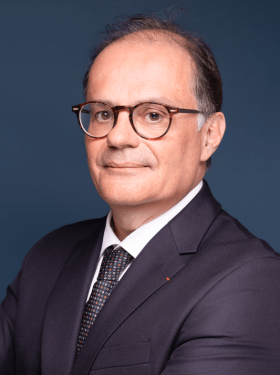
Emmanuel Moulin, Governor
Published on 18th of September 2026

Eurofi – 18 September 2026
Speech by Emmanuel Moulin, Governor of the Banque de France
Ladies and Gentlemen,
It is a great pleasure to speak before you today in Dublin. Let me warmly thank Didier Cahen and David Wright for their invitation. New geopolitical realities, technological change and the need to finance strategic priorities are reshaping the environment in which European banks operate. Fortunately, 15 years of regulatory reforms have placed the European banking sector in a position of strength. EU banks are resilient, well-capitalised and liquid, with CET1 ratios and liquidity buffers at historically high levels.

Financial stability remains the foundation upon which competitiveness can be built. Yet the EU has consistently lost ground: for instance, third-country groups now provide 60% of corporate and investment banking services to European clients. This shows that strong fundamentals alone will not suffice to meet Europe’s strategic priorities: financing the climate transition, digitalisation and defence, and strengthening its economic and financial sovereignty in a fragmented world.
To complete the Banking Union and enable Europe to meet these challenges, I will focus on three priorities: first, overcoming the fragmentation that hinders the emergence of truly European banking groups; second, simplifying the prudential framework while preserving resilience and a global level playing field; and third, adapting our framework to the financing needs of the European economy.
I) Overcoming European fragmentation
Let me start with a simple observation: Europe has a Single Market, but it does not yet have a truly single banking market.
This matters because competitiveness increasingly requires scale. European banks must be able to reach the critical mass needed to invest, innovate and digitalise efficiently. They should be able to deploy capital, liquidity and expertise seamlessly across the Union, supporting households and businesses wherever opportunities arise. Yet integration remains incomplete. Cross-border lending accounts for less than 15% of total euro area lending, and cross-border banking consolidation remains rare. Many banking groups continue to function as networks of national entities rather than as genuinely European firms.
While the causes are diverse, the prudential framework is part of the equation. Our Banking Union has delivered resilience, but it has yet to deliver full integration. Despite the undeniable successes of the Single Supervision Mechanism (SSM) and Single Resolution Mechanism (SRM), European banking groups are still too often required to manage capital and liquidity along national lines. Furthermore, layers of EU-specific and siloed requirements continue to constrain integration and weaken Europe's competitiveness potential.
The solution is straightforward: we need to better recognise the consolidated management of capital and liquidity within cross-border banking groups. The time has come to deliver on cross-border capital and liquidity waivers. Host countries' concerns can be addressed through appropriate safeguards, notably by ensuring effective support from parent companies to subsidiaries in times of stress. And while further progress on deposit guarantee arrangements would be desirable, it should not be a prerequisite for taking the next steps towards banking integration.
But removing fragmentation is only part of the answer. We must also ensure that our prudential framework supports competitiveness through greater simplicity, without compromising resilience.
II) Delivering on simplification and ensuring a global level playing field
Speaking in Dublin, it may be appropriate to recall Oscar Wilde's observation that “the truth is rarely pure and never simple.”i Prudential regulation, however, should strive to prove him wrong: it should be pure in its objectives, simple in its execution, and robust in its outcomes.
Before exploring possible avenues for simplification, let me highlight three guiding principles. First, simplification is not deregulation. Recent episodes of banking turmoil have confirmed that Europe was right to deliver Basel III. Moreover, Europe has been among the jurisdictions most committed to its timely and consistent implementation.

Second, simplification must remain risk-based. Proportionality is needed, yet simpler should never mean weaker. Third, greater simplicity should not harm consistency. The strength of the Banking Union will always rely on its single supervisor, its single resolution framework and its single rulebook.
The Commission's competitiveness report points in the right direction. It calls for a more holistic assessment of capital requirements, moving away from siloed frameworks and towards a more coherent view of the prudential framework. Simplifying the capital stack is equally important. Successive layers of requirements have made the EU framework the most complex in the world. We should focus less on the accumulation of constraints and more on the coherence of the overall framework.

This calls for a better alignment of MREL and TLAC requirements, a streamlining of Pillar 2 by removing overlaps with Pillar 1, and a review of EU-specific layers and parallel constraints. It is high time to reconsider the usefulness of maintaining in the EU framework the specific Systemic Risk Buffer (SyRB) and the additional Pillar 2 requirements on top of the leverage ratio; we could also restrict the MDA trigger to the solvency stack only.
Finally, competitiveness requires a global level playing field. Europe needs a diversity of banking business models, combining strong retail-oriented institutions with banks able to compete globally in capital markets and corporate and investment banking activities. Both are essential to the success of the Savings and Investments Union, which requires not only the mobilisation of savings but also the capacity to finance large-scale investment across Europe. The Commission therefore took the right decision by neutralizing the capital impact of the fundamental review of the trading book (FRTB) for 2027-30, thereby preserving a level playing field with other major jurisdictions. We should now use this time to identify a durable solution that preserves both financial stability and international competitiveness beyond 2030.
III) Building on past successes to support Europe’s financing needs
The third priority is to build on our own successes: 15 years of supervisory reforms, including the Targeted Review of Internal Models by the SSM and the IRB repair by the EBA. These have considerably strengthened the reliability of banks' risk assessment frameworks. This progress should now be reflected in the way we calibrate prudential requirements. In particular, the output floor deserves to be reviewed where it has become partly redundant. The objective is not to weaken prudential safeguards, but to ensure that capital is mobilised as efficiently as possible in support of Europe's investment needs. The prudential case for making the preferential treatment of residential real estate exposures permanent is strong, given their historically low risk profile and the strong prudential safeguards already embedded in the framework. We should also consider whether a preferential treatment could be extended to certain unrated corporates.
More generally, prudential rules should not unnecessarily constrain financing activities that are strategically important for the European economy. Trade finance and specialised lending play a critical role in supporting industrial investment, exports and supply chains. Here again, reducing instances of EU-specific gold-plating would help preserve key financing channels.
Finally, developing deeper and more diversified sources of market-based finance remains essential to the success of the Savings and Investments Union. In this regard, the ongoing review of the securitisation framework and the new treatment of equity exposures in legislative programs offer important opportunities to unlock additional financing capacity for the European economy.
***
Allow me to conclude with one final observation. Fifteen years ago, our priority was resilience. Today, our challenge is to turn resilience into competitiveness, and competitiveness into financial sovereignty. A more integrated banking market, a simpler prudential framework and a financing ecosystem better aligned with Europe's needs would help achieve all three. In a fragmented world, Europe can no longer afford a fragmented banking ecosystem.
i Wilde, (O). The Importance of Being Earnest. 1895.
Download the publication
Updated on the 18th of September 2026