
Financing
Innovation
European Union
Econostream : « The SIU will be instrumental to financing innovation”
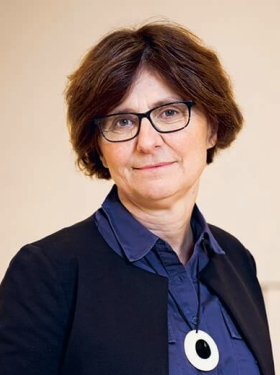
Agnès Bénassy-Quéré, Second Deputy Governor of the Banque de France
Published on 30th of October 2026

Interview by David Barwick with Agnès Bénassy-Quéré, Banque de France Deputy Governor.
Econostream, 17 October 2026
Q: Deputy Governor, as you note in the first of two papers you recently authored on the Savings and Investments Union, European households already save a great deal. Is the problem mainly that those savings are not being channeled efficiently toward productive investment, or that there are not enough sufficiently attractive investment opportunities in Europe in the first place?
A: I think it’s the same. They are not channeled to productive investment because productive investments do not look attractive enough for households. So, this is the whole purpose of the Savings and Investments Union: to make them more attractive, to cut intermediation costs and to simplify access to more diversified investment. It’s not the case that the investment rate is too low in Europe. It is at about the same level as in the US, but the less productive part is higher, for instance in real estate. So, the purpose is to make productive investments more attractive for savers.
Q: In the second paper, you argue that reducing financial-market frictions could lower financing costs and support investment. In France specifically, how much of the investment weakness is really a financing problem, and how much reflects insufficiently attractive expected returns?
A: There’s no problem of access to financing in France. Credit growth has continued, so this is not the issue. The issue is the composition of this financing: too much debt, not enough equity. If you look at the liabilities of the corporate sector in aggregate, equity represents around 44% of total liabilities in the euro area, compared with 69% in the US. The UK is more like the US, at 61%, whereas France is at 41%. We know that equity is particularly important for sectors with limited physical collateral and business models that are more uncertain. So rebalancing firms’ financing in favor of equity will be key to accelerating innovative activity. And within equity, the weakness concerns both listed and unlisted equity. People often focus on unlisted equity because they think about venture capital, but listed markets matter too, at a later stage of firm development. There is still a tax incentive to finance investment through debt rather than issuing equity, but I think the problem is much bigger than that. There is a kind of bad equilibrium. Companies see that the stock market in the EU is less deep and liquid, so either they go to the US to issue equity, or they do not issue equity. Institutional investors, in turn, go to the US to find a liquid stock market to be invested in.
Q: Does the AI investment boom make completing the SIU even more urgent?
A: I think we should be careful not to focus too much on AI itself. AI is going to be a general-purpose technology. It will feed research in pharmaceuticals, energy-saving industries, new energy and many other sectors. When we talk about innovation, it does not necessarily mean investing in AI companies themselves. Innovation can also take place in traditional sectors, including agriculture. The SIU will be instrumental to financing innovation in the broadest sense.
Q: In France and elsewhere in Europe, households hold a large share of their savings in liquid and relatively safe assets. To what extent does that reflect precautionary behavior and concern about the economic outlook, rather than deeper structural preferences?
A: It’s both. One structural difference is the pension system. In most European countries we have pay-as-you-go systems. In contrast to PAYG systems, funded pension systems accumulate savings with a long-term horizon, which allows them to be patient and take more risk, and hence have a higher share of equity. In France, we have a dynamic life-insurance sector, part of which in practice resembles a collection of pension funds. But it is more liquid, and that reduces the capacity of life insurers to invest in equity, even though in practice the money is quite sticky. One idea in the SIU project is therefore to incentivize long-term investment through automatic enrollment in supplementary pension schemes and to make long-term investment vehicles more attractive. The objective is also to make the European regulation more favorable to long-term investment and, at national level, to promote Swedish-style savings accounts that are very simple and give households an incentive to take a little more risk. But we have to be careful not to push households into taking too much risk.
Q: If the Savings and Investments Union succeeds in moving more household savings toward equity and other market-based investments, how significant could the effect on European growth and productivity realistically be?
A: It’s difficult to tell because there is not much quantified empirical evidence. One study using Danish data finds an additional productivity increase of around 3%-5% over five years for unlisted companies receiving pension-fund investment. Then, there are macroeconomic simulations. Various people, including at the IMF, have done simulations and find that the effect could amount to an additional 1%-1.5% of GDP after ten years, which is very significant. We also have in-house research showing that better intra-EU diversification of equity investment could raise returns by around 0.25-0.75 pp per year.
Q: You identify a range of institutional and regulatory barriers to a genuinely integrated European capital market. Which are the most important, and which could realistically be removed within the next few years?
A: I think the different pieces go together, so we should avoid cherry-picking. But doing one thing would still be better than doing nothing. The new agreement in the Council on the Market Integration and Supervision Package is very important. It includes single supervision of significant CCPs, CSDs, trading venues and crypto-asset service providers. This is potentially a game changer.
Single supervision of banks, with all its limitations, has been a game changer. I think this could similarly create a level playing field, simplify cross-border activities and reduce intermediation costs that the saver does not see because there is a kind of black box between the saver and the firm.
I would identify three major blocks in the SIU project. The first is single supervision of significant market infrastructures. The second is simplifying savings products, making them more conducive to diversification and long-term investment, together with financial literacy. The third is tokenization, in which the Banque de France is particularly involved.
Q: Why do you see tokenization as an important part of the Savings and Investments Union?
A: Because it could reduce the cost of intermediation through shared-ledger infrastructure, where intermediaries can connect their own ledgers and automate procedures such as coupon and dividend payments. It could then make issuance more accessible to smaller firms because the cost would be lower. That is extremely important for innovative companies. And as tokenized securities can already be posted as collateral (under certain conditions), this market could expand rapidly. For multinational companies, 24-hour tokenized markets could also be very useful for managing cash balances across currencies and time zones.
The introduction of the Pontes pilot on 21st September 2026 is a key milestone on the road towards a secure ecosystem for tokenized finance, as Pontes now allows tokenized assets to be settled in a tokenized central bank currency. Starting in early December, tokenized commercial paper will be issued, traded and settled entirely in tokenized form (Pythagore project).
Q: Can Europe develop capital markets with comparable depth and liquidity to those of the United States without a single highly liquid European benchmark asset for pricing and collateral?
A: This question is re-emerging in the debate. I think it will be necessary, as you say, as a benchmark. It would also, paradoxically, allow intermediaries to take more risk. If they have a safe source of liquidity in one pocket, then in another pocket they can take more liquidity risk. But then it becomes a question of sequencing and leaning with the wind. There is momentum around innovation and equity markets. I think the safe asset will come next. But putting the safe asset at the core of the Savings and Investments Union would have run the risk of blocking the negotiation. So, it is better to start with things that are somewhat easier, even though they are not exactly low-hanging fruit.
Q: You describe legal, tax, supervisory and technological fragmentation as raising the cost of cross-border investment in Europe. How much progress toward a genuinely integrated capital market is possible without significantly greater harmonization in these areas?
A: The 28th regime is intended to contribute to further harmonization. It would be an optional regime available to companies that want a single corporate-law regime across European countries. I think it is a reasonable project. You could argue that it does not include taxation, social law and so on, but extending to these areas of law is not realistic at this stage. And on taxation, I would also point out that the corporate income tax rates and even bases differ across US states. Yet, nobody says that this prevents the United States from having a capital-markets union. So, we should perhaps downplay the argument that complete harmonization is necessary. These issues are very important, but we should be careful not to use them as an excuse to stop everything else. It is easy to say that before we have full tax harmonization, we cannot have a capital-markets union — and then you simply close the discussion.
Q: You highlight pension funds as a way of pooling long-term savings that are particularly well suited to equity investment. What role should pension funds and other long-term institutional investors play in financing European companies?
A: A key role. Europe is entering a major demographic transition. Pay-as-you-go pension systems will be under pressure, so supplementary, funded pensions make sense. But you have to be careful because one generation cannot be made to pay twice — both for the pensions of the previous generation and fully for its own future pension. So, the pay-as-you-go pension systems need to be sustainable by themselves. Then you can offer an additional funded scheme, with automatic enrollment but an opt-out. There is also evidence that automatic enrollment can reduce inequality. Today, some households understand the demographic constraints on pension systems and prepare for them. Those tend to be higher-income households. Lower-income households are more likely simply to rely on the existing system. Automatic enrollment can therefore give lower-income households access to higher-return, long-term investment products as well.
Q: Given the substantial differences between European countries, would some countries have much more to gain from a successful Savings and Investments Union than others?
A: That is a very interesting question. There is a very large home bias in equity investment: French investors invest in French stocks, German investors in German stocks, and so on. The countries that lose most from this are the smaller Eastern European countries that badly need more equity inflows and would benefit greatly from greater diversification of equity investment.
There are several misconceptions about the Savings and Investments Union. The first of them is that it is designed for countries that have a large financial industry. No. It is also designed to reduce rents by increasing competition. More competition and lower intermediation costs mean more returns for households and more financing for firms.
The second misconception is that it is designed to “mobilize” your savings. My God, no. Nobody is going to seize your savings. The idea is simply to offer a wider range of investment opportunities that are more attractive, more diversified and provide a better risk-return combination.
And the third misconception is: “Oh my God, Europeans are financing American firms.” But Europe has higher savings than investment, so by construction Europeans are going to invest overseas, and, if wisely diversified, this provides a better combination of risk and return. That will continue as long as savings exceed investments in Europe.
If there are more attractive investment opportunities in the EU, then more investment will take place in Europe and firms will issue more equity in Europe, so the gap between savings and investments will decline.
At the level of individual industries there will of course be some reallocation, but I do not see any European country being a net loser. Some countries, particularly in Eastern Europe, may benefit more than others from easier access to bond and equity markets.
END
Download the full publication
Updated on the 30th of October 2026